
Janesville, WI · Garage Door Service
When Your Garage Door Predates the Insulation Codes
Janesville homes built 1942-1982 often have single-layer steel doors with no insulation. Here's what that means for your garage in a cold climate like ours.
- Repairs & new doors
- Springs & openers
- Serving 4 nearby communities
When Waiting Is Fine
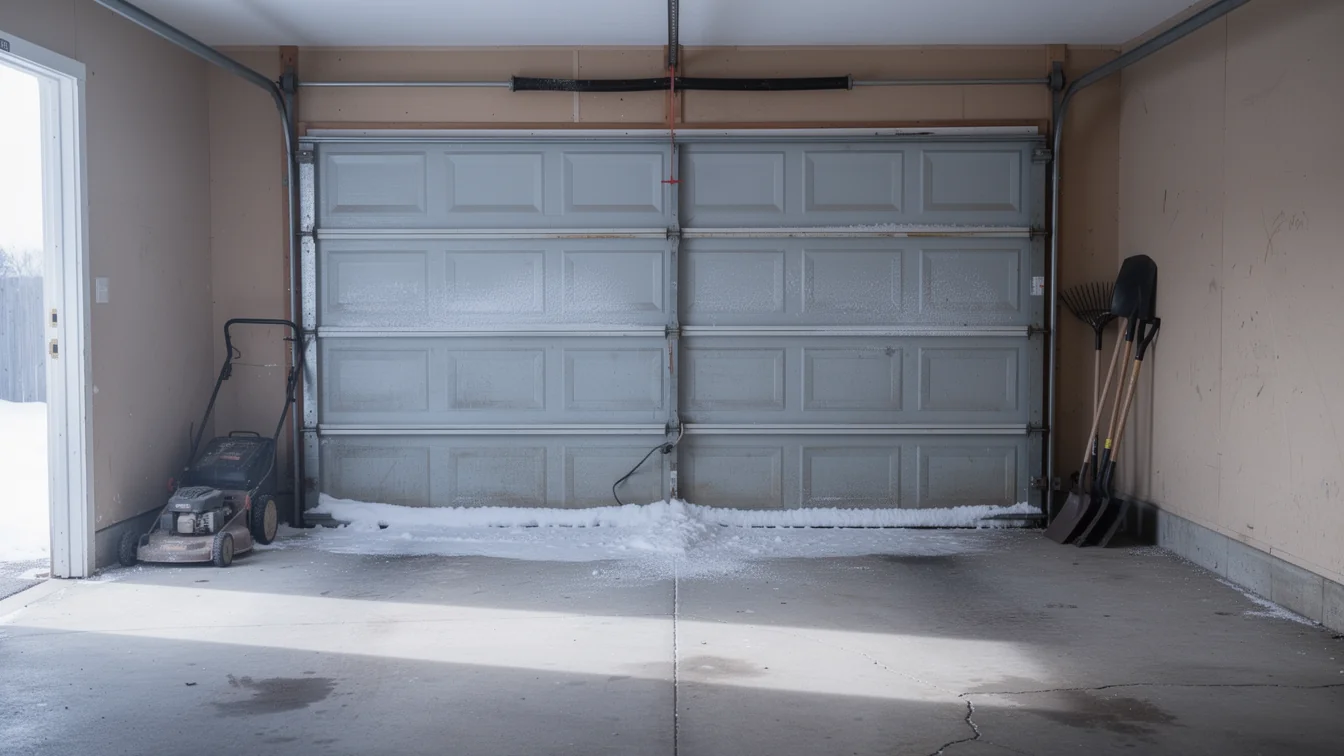
Not every old door is an emergency. If your garage is a single-layer steel door from the 1960s or 70s and it still opens, closes, and seals reasonably well at the bottom, you don't need to replace it just because it's uninsulated. A lot of Janesville houses in the 1942-1982 range still have their original door panels doing fine mechanical work even though the steel is thin and the R-value is close to zero. If the garage isn't heated and you're not storing anything that minds the cold, an uninsulated door is a cosmetic and comfort issue, not a structural one. Where we tell people to wait: the door cycles smoothly, the panels aren't rusted through at the bottom six inches, and you're not fighting condensation or frost on the inside face every winter. Spend your money on the spring or the opener first if those are the parts actually failing. A new insulated door doesn't fix a bad torsion spring, and a bad spring doesn't care how many layers of steel are between it and the weather.
The Situation
Janesville's housing stock skews old. Across the 24 named areas we work in, most homes went up in the 1960s and 70s, with the broader range running 1942 to 1982 and a median build year around 1971. That means a huge share of attached garages still have their original doors, or a direct steel replacement installed sometime in the 80s or 90s before insulated doors were standard. Back then, nobody was required to insulate a garage door, so single skin steel with no thermal break was just what you got. The result today is a lot of doors that function fine but do nothing to stop cold air from moving through the garage and into any shared wall with the house. If your garage backs onto a mudroom, laundry room, or bedroom, that uninsulated steel is a direct path for outside temperature to the inside of your home.
What Local Conditions Do
This area sits in a severe cold climate band, and that matters more for an old uninsulated door than people expect. Steel contracts in the cold, and a door built to 1970s tolerances doesn't have the same expansion gaps or weatherstripping channels as anything made in the last fifteen years. On a single-digit night, an uninsulated panel can be ten to fifteen degrees colder on the inside face than the garage air itself, which is exactly the setup that produces condensation and, eventually, surface rust at the bottom panel seams. We see this most on doors with no vapor barrier behind the steel, which describes nearly every pre-1980s door still in service here. Cold also makes old springs and rollers work harder: the grease stiffens, the steel gets brittle, and a spring that was already near the end of its cycle count is more likely to let go on a cold morning than a mild one. None of this is unique to one house, but it's consistent across the older stock in this climate band, which is most of what's out there.
What It Costs
We can't give you a number here without knowing the door, so this section is about what drives the decision, not a price. An uninsulated steel door from the 1960s-70s era is usually a repair-or-replace call rather than a repair-only one, because parts for that specific panel profile often aren't stocked anymore. If the track, spring, and opener are sound and only the panel skin is the issue, patching or painting can buy years. If the bottom panel is rusted through or the door has racked out of square from decades of thermal cycling, replacement with an insulated door is usually the better money, especially given this area's household income levels support that kind of upgrade when it's warranted. One honest limitation: we don't install off-brand import doors just to hit a lower number, so if budget is the only factor, a straight single-layer steel replacement will usually be your cheapest real option, insulated or not.
Frequently asked questions
Is it worth insulating my garage door if the house was built in the 1960s or 70s?
If the garage shares a wall with living space, yes, it usually pays off here given how cold it gets. If the garage is detached or isolated from the house, the benefit is mostly comfort and condensation control rather than a heating bill change.
Why does my old garage door sweat on the inside in winter?
Single-layer steel doors from this era have no vapor barrier, so the inside face gets as cold as the outside air. Warmer, moist air inside the garage hits that cold steel and condenses, which over years causes rust at the bottom seams.
Can you just add insulation to my existing old door instead of replacing it?
Sometimes. Foam-backed insulation kits work on many flat-panel steel doors from the 60s and 70s if the panels aren't rusted or warped. We'd need to look at the actual door and track condition before telling you whether a kit makes sense versus a full replacement.
Related garage door services in Janesville
More garage door guides
Book garage door service in Janesville
Call now or request a quote - tell us what the door is doing and where you are.