
Janesville, WI · Garage Door Service
Replacing a Garage Door in Janesville's Older Housing Stock
New garage door installation in Janesville, WI, sized for homes built 1942-1982 and Wisconsin's severe winters. Straight talk on cost and insulation details.
- Repairs & new doors
- Springs & openers
- Serving 4 nearby communities
The Symptom
You're not calling about a broken spring. You're calling because the door itself is done - the steel skin is bowed at the bottom panel, the seams have rusted through at the corners, or it's a single-layer door with no insulation that sweats and frosts on the inside every January. Maybe the opener still runs fine but it's straining against a door that's heavier than it should be from years of moisture soaking into a wood-core panel. Around Janesville, we see a lot of this on doors that are original to the house, which in this area often means a door pushing 50 to 60 years old. It still opens. It just doesn't belong on the house anymore, and patching it is throwing good money at a door that's going to fail again within a season.
What Causes It Around Here
Most of the housing stock across this service area went up between 1942 and 1982, with a lot of it clustered in the 1960s and 70s - that's the pattern across the named neighborhoods from here out to places like Milton and Edgerton, not just one pocket of town. Doors from that era were built to a different standard: single steel skin, no thermal break, minimal weatherstripping, because insulated doors weren't the norm yet. Janesville sits in a cold-climate zone with severe winter exposure, and a non-insulated door in that kind of cold does two things over time. First, the steel contracts and expands enough each season to work the fasteners loose and crack old caulking at the seams. Second, without a thermal break, moist garage air condenses on the inside skin all winter, which is what rusts out the bottom panel and rots any wood trim around the jamb. None of that is a defect in the door - it's just what 50-plus winters do to a door that was never built to handle them.
Where This Job Goes Sideways
The door is rarely the only thing that's aged. On houses from this build era, the track is often sized for the old door's thinner panel and narrower stile, so a new insulated door - which runs thicker - won't just bolt onto the existing track and drums without resetting them. The header above the opening can also be a problem: framing from the 1960s and 70s wasn't always sized with a heavier insulated door and a modern opener bracket in mind, and if the wood there has taken on moisture over the decades, it won't hold new lag screws the way it needs to. We also run into openers wired straight into an old outlet with no dedicated circuit, which isn't a garage door problem exactly, but it's one we flag before we hang anything new. None of this means the job can't get done - it means the honest quote includes time to check the header and track, not just a number for the door panel.
What the Fix Involves
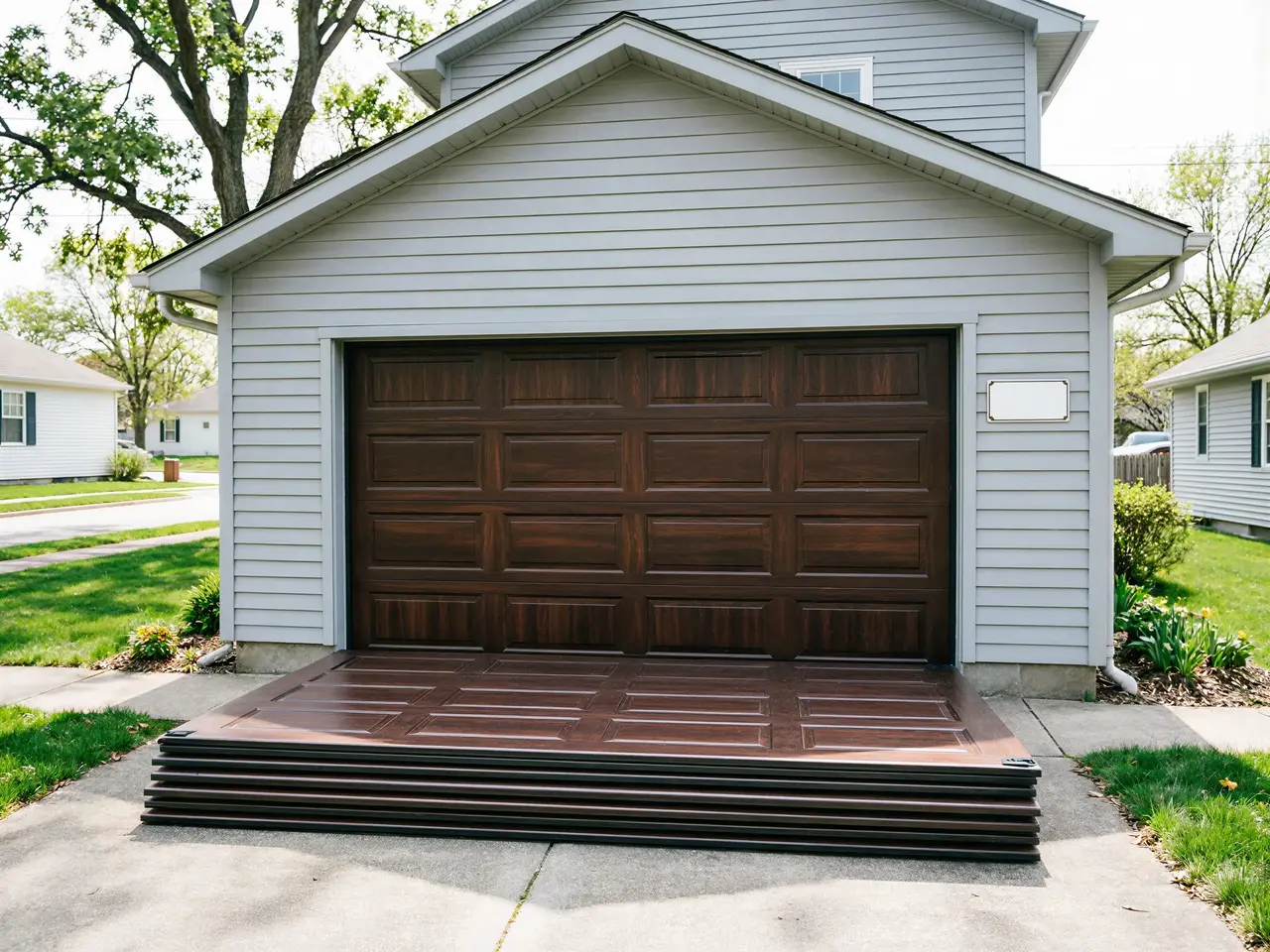
A proper installation starts with pulling the old door and track completely, not reusing hardware that's been flexing and rusting for half a century. We check the header for solid wood before anything gets mounted, reset the track to match the new panel thickness, and balance the springs to the new door's actual weight - guessing on spring size is how you get a door that slams shut or won't stay open. Given the winter exposure here, an insulated door with a real thermal break is worth the extra cost over a single-skin replacement; it's not an upsell, it's matched to the climate this house sits in. One honest limitation: if the opening itself is out of square from decades of settling, that adds labor beyond a standard swap, and we won't know the full scope until the old door is off the track. We'll tell you before we commit to a number, not after.
Frequently asked questions
Do I need a new opener when I replace the garage door?
Not always. If your current opener is in good shape and has enough lift capacity for the new door's weight, especially if you're moving to an insulated panel, it can often stay. We check lift capacity and the travel limits before reusing it rather than assuming it'll work.
Is an insulated door worth it for a Janesville garage?
Given the severe winter exposure here, yes for most owners - it cuts down on condensation on the inside skin and keeps an attached garage noticeably less cold, which matters if there's living space above or beside it. It costs more upfront than a single-skin door, but it's built for this climate, not a mild one.
My house is from the 1960s or 70s - does that affect installation?
Often, yes. Houses built in that stretch around here tend to have a track and header sized for the original thinner door, so a new insulated panel usually means resetting the track and checking that the header can take the new mounting hardware before the door goes up.
Can you just replace the door and leave the old track?
Usually not if you're moving to a thicker insulated panel - the old track won't hold the new roller spacing correctly and the door won't run true. We only reuse track when the new door matches the old panel's dimensions closely enough to make that safe.
Book garage door service in Janesville
Call now or request a quote - tell us what the door is doing and where you are.