Janesville, WI · Garage Door Service
Garage Door Maintenance Around Janesville
Garage door maintenance for Janesville homes built 1942-1982, where cold winters and original hardware wear springs, rollers, and cables faster than newer stock.
- Repairs & new doors
- Springs & openers
- Serving 4 nearby communities
The Symptom
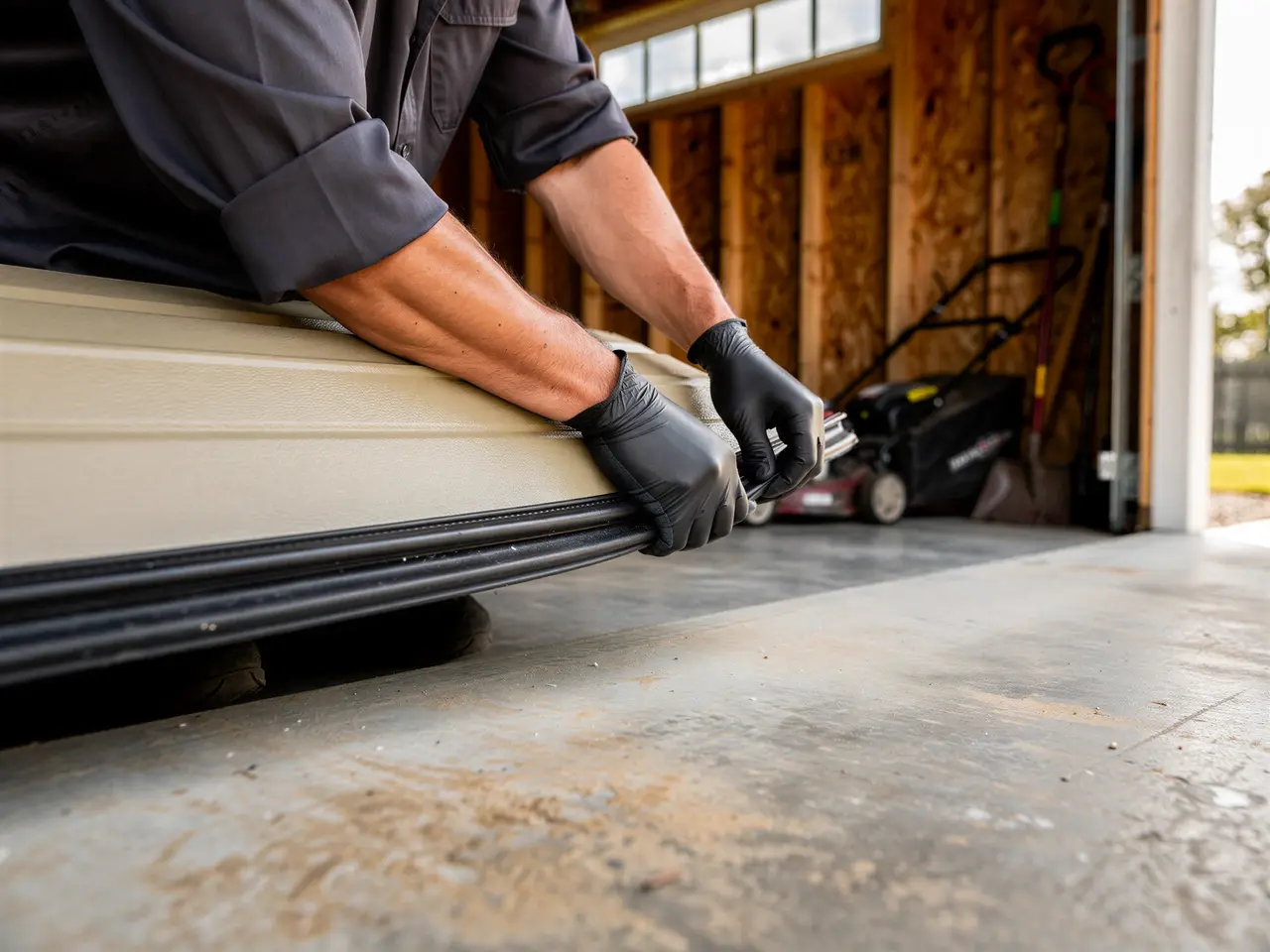
The door still opens, but it's not right. It groans partway up, hesitates at the same spot every time, or the opener strains and reverses before it reaches the top. Sometimes it's a scrape or a metallic clack from the track as a roller works loose. None of that is an emergency yet, which is exactly the problem: it gets ignored until the spring snaps or the cable frays through, usually on the coldest morning of the year when you need the door open to get to work. Maintenance is the visit that catches the groan before it becomes a no-go. We check spring tension, roller condition, track alignment, cable wear, and hardware fasteners, and we adjust or replace what's heading toward failure instead of waiting for it to fail. Across the Janesville service area, the houses asking for this kind of visit tend to share an age and a set of original parts, which is the real story behind the symptom.
What Causes It Around Here
Most of the housing stock in and around Janesville went up between 1942 and 1982, with a median build year around 1971, and the 24 named areas in this service territory are dominated by that same 1960s-70s construction. That means a lot of doors still running on original or first-generation replacement hardware - torsion springs sized to 1970s door weights, steel rollers instead of nylon, galvanized cable that's been flexing for decades. This region also sits in a severe cold climate band, and steel hardware does not like big temperature swings. Lubricant stiffens, metal contracts, and a spring that was already fatigued from forty-plus winters loses tension faster than it would in a mild climate. The combination of old parts and hard winters is why maintenance calls cluster in this area in a way they wouldn't in a newer subdivision with ten-year-old doors and modern openers. The fix isn't exotic - it's catching wear in hardware that's simply been in service a long time, under conditions that accelerate that wear.
Where This Job Goes Sideways
The job goes wrong when someone treats a 1970s-era door like a new one. A spring rated for a lighter modern insulated panel doesn't belong on an old solid-wood or early steel door, and swapping in whatever's on the shelf without checking the door's actual weight is how you end up with a door that slams down or won't stay open. On houses this old, the track hardware is sometimes side-mounted in a way that newer kits don't match cleanly, so a rushed parts swap can leave brackets stressed or misaligned. Cold makes mistakes worse, too - a cable or spring under tension is more likely to snap while someone's working on it in freezing temperatures than in July. And here's the honest limitation: if a door has been neglected long enough that the track is bent, the hinges are cracked, and the spring is shot all at once, maintenance isn't the right call anymore - that's a replacement conversation, and we'll tell you so instead of patching a door that's done.
What the Fix Involves
A real maintenance visit on a house of this vintage starts with checking the spring's tension against the door's actual weight, not a generic chart. We inspect rollers for flat spots or cracking, check cable fray at the drum and bottom bracket, and verify the track is still plumb - common on older slab foundations that have shifted slightly over the decades. We lubricate hinges, rollers, and springs with the right product for cold-weather service, since the wrong lubricant gums up and attracts grit instead of protecting the metal. Hardware gets torqued, not just eyeballed, because loose lag bolts in an old jamb are a frequent source of the clack-and-hesitate symptom. If the opener is original to the house, we check the force settings, since a worn spring shifts how hard the opener has to pull, and that imbalance is often what trips the safety reversal. None of this requires tearing the door down. Most of these visits run an hour or so, and the goal is simple: catch the part that's two winters from failing before it fails on you.
Frequently asked questions
How often should I get my garage door serviced in Janesville?
Once a year is a reasonable baseline for most houses in this area, especially anything built before 1982 running original hardware. If the door is making new noise, hesitating, or the opener seems to be working harder than it used to, don't wait for the annual visit - that's the door telling you something's already wearing.
Why does my garage door act up more in winter?
Steel springs and cables lose a little tension as metal contracts in the cold, and lubricant stiffens, so hardware that was already marginal shows its wear in winter first. In a severe cold climate like this one, that effect is more pronounced than it would be somewhere milder.
Is maintenance worth it on a really old door?
Usually, yes - most wear items like springs, rollers, and cables can be serviced or replaced without touching the door panel itself. But if the track is bent or the door structure itself is failing, we'll tell you honestly when replacement makes more sense than another repair.
Can I just lubricate the door myself and skip a visit?
Lubrication helps, but it won't catch a spring that's lost tension or a cable that's fraying near the drum, and those are the parts most likely to fail suddenly. A visit checks the things you can't judge by ear or by looking.
Related services
By Neighborhood
Maintenance across the Janesville area
We also handle maintenance in these Janesville-area suburbs.
Book garage door service in Janesville
Call now or request a quote - tell us what the door is doing and where you are.