
Janesville, WI · Garage Door Service
Garage Door Roller Replacement for Janesville-Area Homes
Worn rollers on Janesville's older garage doors fail fast in cold winters. We replace steel and nylon rollers on homes built from the 1940s through the 1980s.
- Repairs & new doors
- Springs & openers
- Serving 4 nearby communities
The Symptom
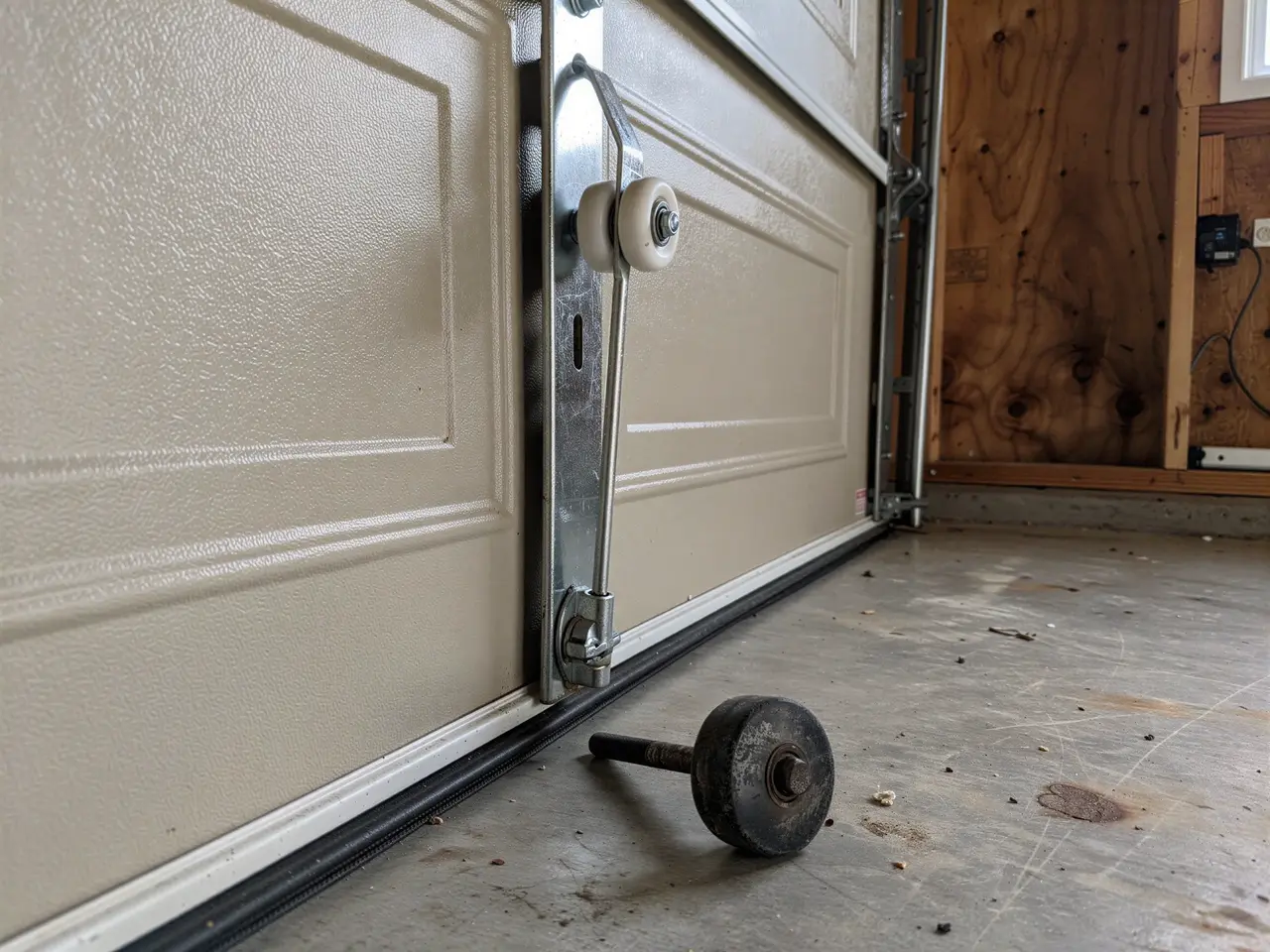
You notice it before you can name it. The door jerks instead of gliding, there's a grinding or popping sound somewhere along the track, and sometimes the door hangs up halfway and won't finish its cycle without a shove from the opener motor. Look at the track itself and you'll often see chatter marks or a thin line of rust dust where a roller has been grinding sideways instead of rolling true. On older doors the rollers themselves tell the story: flat spots worn into what should be a round wheel, a stem bent just enough to throw the whole panel out of alignment, or a roller that's cracked clean through and barely hanging on. None of this fixes itself, and a door that's chewing up its track will eventually chew up a cable or bend a hinge too, which turns a cheap part into a bigger bill.
What Causes It Around Here
Most of the houses across this service area were built between 1942 and 1982, with the bulk of that stock going up in the 1960s and '70s across the 24 communities we cover. Doors and track hardware from that era were built to a different standard than what goes in new construction today, and a lot of those original rollers are steel, not sealed nylon, which means less give and more direct wear on the track every single cycle. Add in a cold, severe winter climate and you get a second problem: steel contracts in the cold, grease stiffens up, and a roller that was already borderline starts binding hard on the first deep-freeze morning of the season. That combination - older hardware plus real cold - is why roller wear shows up here on a schedule that doesn't match what you'd see in a milder climate or a newer subdivision.
Where This Job Goes Sideways
A roller swap sounds simple and most of the time it is, but a few things turn it into a longer job. If the track has been ridden by a bad roller for months, the track itself can be bent or dented, and new rollers won't fix a track that's no longer straight - that has to be addressed first or the new rollers wear the same way in a year. On doors from the older end of our 1942-1982 range, the roller stems sometimes don't match what's stocked on the truck, since hinge hole spacing and stem gauge varied more back then than it does now. That can mean a return trip if the door needs a part we have to order rather than carry. And if the rollers failed because a spring is unbalanced and the door's been running heavy on one side, replacing rollers without addressing the spring just buys you a few months before the new ones wear the same way.
What the Fix Involves
We pull the door, check the track for straightness, and replace the worn rollers with sealed nylon units, which hold up better through repeated freeze-thaw cycles than the steel rollers most of these doors shipped with originally. We check stem length and hole spacing against the existing hinges rather than assuming a universal fit, since that's where older doors in this area cause trouble. While the door's apart we check cable tension and spring balance, because rollers rarely fail in isolation - they're usually the symptom of something else putting uneven load on the door. We don't push full door replacement on a job that's really just a roller problem, and we'll tell you plainly if your track or springs need attention beyond what you called about. A straightforward roller job is usually done in one visit; a bent track or a stem mismatch is the exception that takes a return trip.
Frequently asked questions
How do I know if it's the rollers and not the opener?
If the door grinds, jerks, or hangs up at the same spot on the track every time, and you can see flat spots or cracks on the rollers when the door's open, it's almost always the rollers. A failing opener tends to show up as the door not responding at all or stopping randomly, not a consistent mechanical hitch at one point in the track.
Why do rollers wear out faster here than people expect?
A lot of homes in this service area have garage doors original to construction dating back to the 1940s through 1980s, often with steel rollers rather than sealed nylon. Combined with a cold, severe winter climate that stiffens grease and contracts metal, those original rollers wear out on a faster schedule than newer sealed units would.
Can I just replace the rollers myself?
You can, but on older doors the stem length and hole spacing don't always match current universal kits, and a mismatched roller can bind the same way the worn one did. If the track is bent from months of a bad roller riding it, new rollers alone won't solve the noise or the binding.
Will you tell me if I need more than rollers?
Yes. Rollers often fail because something else - an unbalanced spring, a bent track - is putting uneven load on the door. We check those while we're in there and tell you plainly if the roller swap alone won't hold.
Related services
By Neighborhood
Roller Replacement across the Janesville area
We also handle roller replacement in these Janesville-area suburbs.
Book garage door service in Janesville
Call now or request a quote - tell us what the door is doing and where you are.