Janesville, WI · Garage Door Service
Garage Door Panel Replacement in Janesville
Dented, rusted, or cracked garage door panels on an older Janesville house? See why 1960s-70s doors fail this way here, and what a proper panel fix involves.
- Repairs & new doors
- Springs & openers
- Serving 4 nearby communities
The Symptom
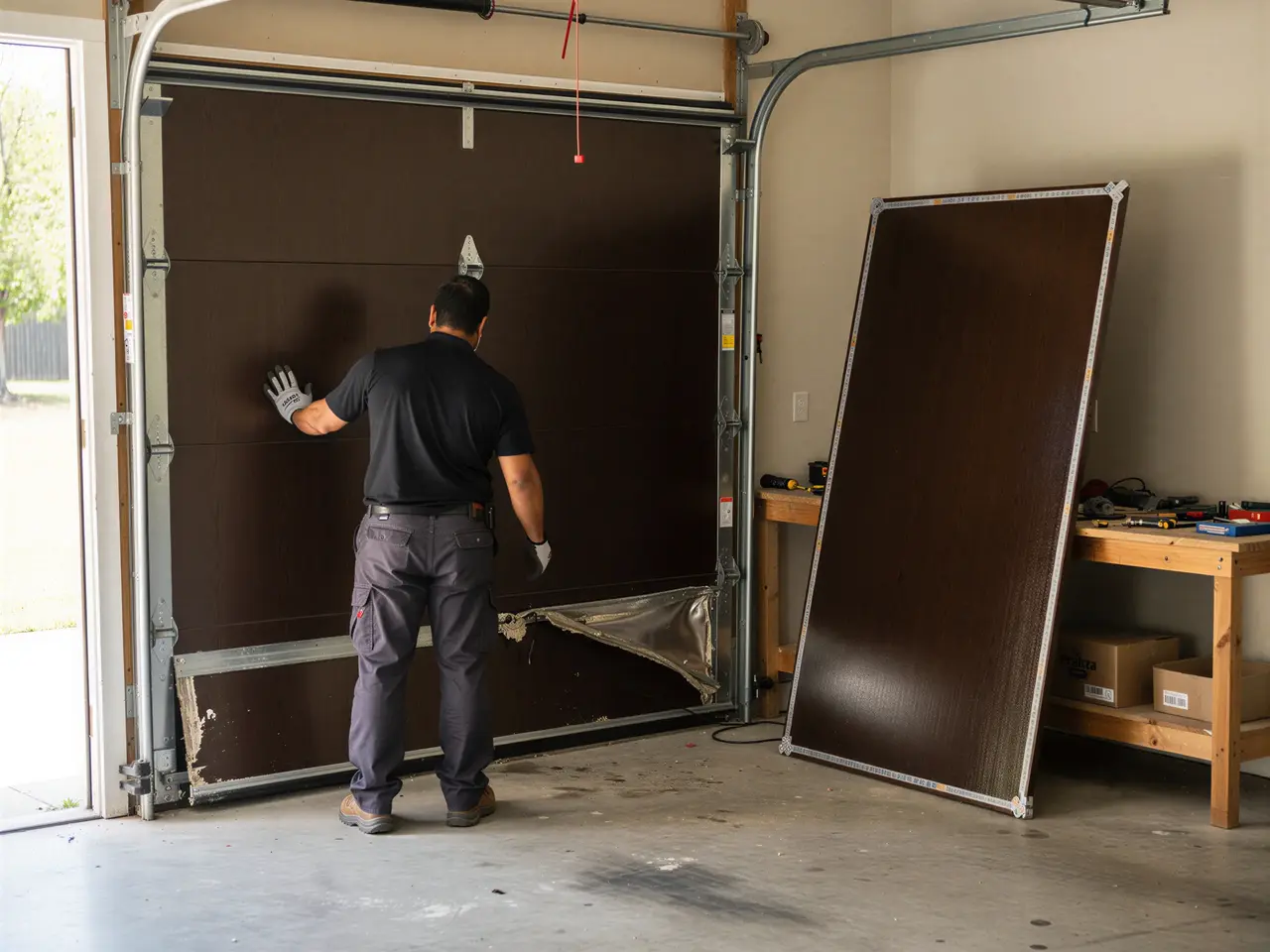
You back into the door, or a winter's worth of road salt finally eats through, and now one section of the door doesn't look like the rest. Maybe it's a dent that's pushed the steel in far enough that the panel binds against the track. Maybe it's a rust bloom along the bottom edge that's gone from surface stain to a soft spot you can push a finger through. Sometimes it's not damage at all but a panel that's bowed or warped, pulling the hinges out of line so the door shudders or scrapes going up.
Any of these show up the same way day to day: the door doesn't sit flush when it's down, it binds partway through the cycle, or the opener strains because one section is dragging instead of rolling smooth on the rollers. Left alone, a damaged panel puts extra load on the hinges next to it, and eventually on the opener itself. A single bad panel is a panel job. A door with three failing sections and worn rollers everywhere else is usually a different conversation.
What Causes It Around Here
Janesville's housing stock mostly went up between 1942 and 1982, with the typical house dating to 1971, and most of what we work on sits in that 1960s-to-70s band. Doors from that era are steel, single-layer, and thin-gauge by today's standard, with none of the foam backing that stiffens a panel against a dent or holds up under repeated flexing.
That construction runs into Janesville's cold climate. Severe freeze-thaw cycles work moisture into the seams at the bottom of the door, where snowmelt and road salt off the driveway sit the longest. Over a few winters that moisture turns surface rust into pitting, and pitting into a panel that's structurally gone at the bottom even though the rest of the door looks fine. With 18,518 owner-occupied houses out of 37,688 households across the service area, a lot of garages still carry that original panel style, which is exactly why panel failure here tends to be a bottom-section problem rather than random damage across the whole door.
Where This Job Goes Sideways
The honest limitation first: matching a replacement panel to a door built in the 1960s or 70s is the hard part, not the install. Panel widths, rib patterns, and colors from that era often aren't made anymore, and a mismatched panel sticks out worse than the dent did. Sometimes we can source a close match. Sometimes we can't, and the real choice is between a visibly different panel or replacing the whole door.
This also goes sideways when a homeowner wants to fix the one bad panel on a door where the other sections are just as old and just as close to failing. Swapping one panel on a door that's otherwise near the end of its life buys a year or two at most before the next section goes. We'll tell you if that's what we're looking at rather than sell a repair that doesn't make sense. And on doors where the track or hinges have bent from the same impact that damaged the panel, the panel swap is only part of the job - we won't quote it as if it's the whole fix.
What the Fix Involves
We start by pulling the model and section number off the door itself, because that's what determines whether a matching panel exists or whether we're into a full-door conversation. If a match is available, the job is mechanical: unbolt the hinges on either side of the damaged section, disconnect it from the rollers, and lift it free without disturbing the sections above or below.
The new panel goes in with the same hinge hardware where it's still sound, new hardware where it isn't. Once it's set, we check the door for square and run it through a full cycle to make sure the rollers track clean and the opener isn't fighting any new resistance. On double doors especially, a panel swap can shift the balance point, so we check spring tension and adjust before we call it done. If the rest of the door is showing the same age and wear as the panel we just replaced, we'll say so.
Frequently asked questions
Can you match a panel on a door this old, or do I need a whole new door?
It depends on the model. Some 1960s and 70s panel styles are still available from the original manufacturer or a compatible supplier, and we can match those. Others are discontinued, and the only real options are a visibly different panel or replacing the full door. We'll tell you which situation you're in before we order anything.
Why did the rust start at the bottom of the panel instead of somewhere else?
That's where moisture sits longest. Snowmelt, road salt, and ground splash collect at the bottom section through Janesville's winters, and on a single-layer steel panel from the 1960s or 70s, that moisture eventually works through the seams from the inside before it shows on the surface.
Is replacing one panel worth it if the door is original from the 1970s?
Sometimes, if the rest of the door is sound and the panel damage is isolated. If the other sections show the same rust or wear pattern, you're likely looking at the next panel failing within a season or two, and a full door replacement often makes more sense than repeat panel swaps.
Will a new panel match the color of the rest of my door?
We try to match it as close as the available stock allows, but older doors were painted with finishes that aren't always reproduced exactly. On some jobs the new panel is a close match out of the box; on others a full-door repaint or replacement is the only way to get an even look.
Related services
By Neighborhood
Panel Replacement across the Janesville area
We also handle panel replacement in these Janesville-area suburbs.
Book garage door service in Janesville
Call now or request a quote - tell us what the door is doing and where you are.